|
|
 |
 |
 |
 |
 |
 |
 |
|
|
|
|
| |

Lookout |
|
The windows depicted in Lookout were photographed in the United States, Great Britain, and Australia, countries where I have lived for an extended period of time. Lookout is a collection of observations into how we live in proximity to other people and nature, and how we strike a balance between the desire for contact, concern for security, and our need for privacy.
|
|
| |
|
|
|
|
 |
 |
 |
 |
 |
 |
 |
 |
 |
 |
 |
|
|
|
|
| |

Lifelines |
|
The conveyance of energy is the heart of this project. All of the cords depicted in these images supply the electricity to the light source, which makes the photograph possible. Sometimes, the cable changes its identity from a crisp line to a faint trace, as if it was a ray, wave, particle, halo, or flare of light. The series also includes re-wired cables that have been damaged or worn, and are in varying states of repair.
|
|
| |
|
|
|
|
 |
 |
 |
 |
 |
 |
 |
 |
 |
 |
 |
|
|
|
|
| |

Lightheaded |
|
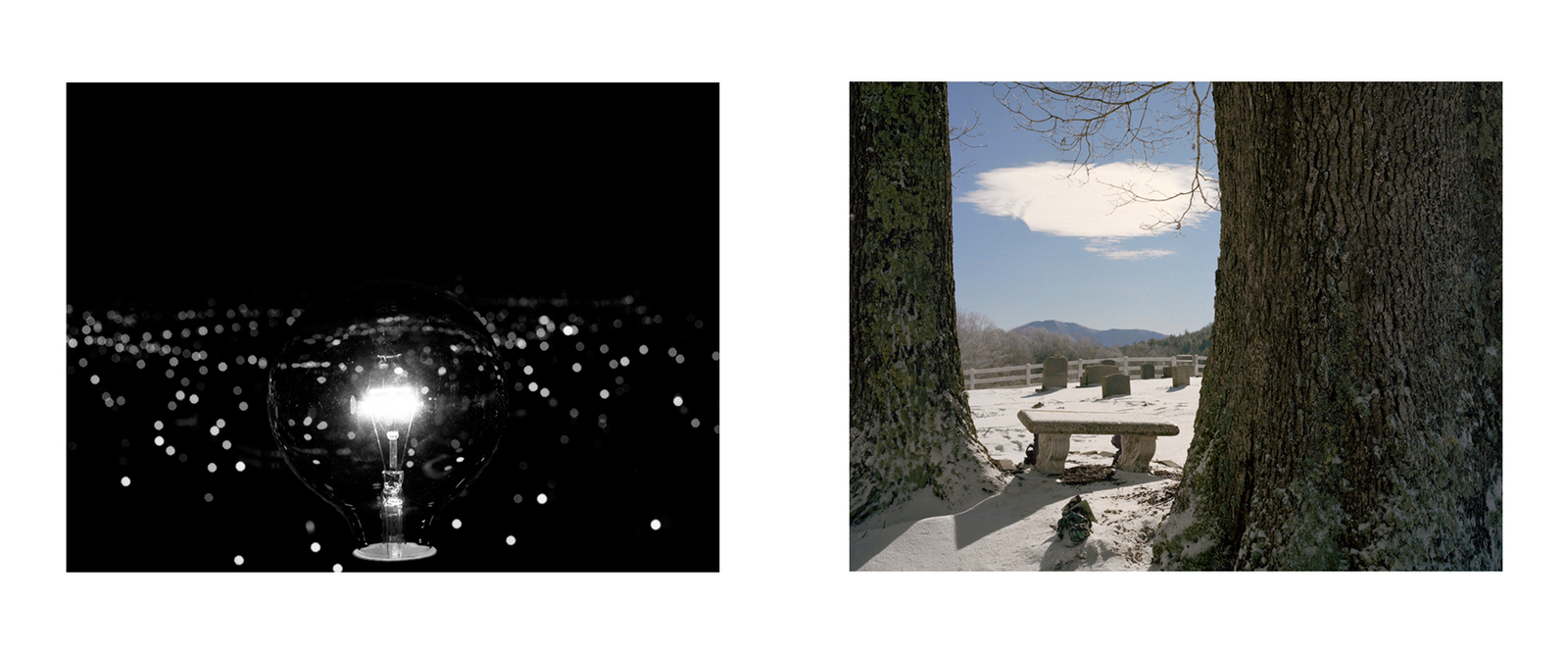
The photographs in Lightheaded record a bulb’s interaction with other actual or reflected lights, thus making it possible to explore the boundary between the various light sources. Through the action of light, this boundary becomes more fluid. The images generate a dialogue between such qualities as opacity and transparency, individuality and commonality amongst others.
|
|
| |
|
|
|
|
 |
 |
 |
 |
 |
 |
 |
 |
 |
 |
 |
|
|
|
|
| |

Interior Light |
|
The idea of a house full of light is a response to the illumination found in domestic settings. Light sources such as desk and floor lamps are photographed in a variety of situations. Beginning with views of the cellar and ending with pictures of windows at night, an imaginary dwelling is constructed from these images.
|
|
| |
|
|
|
|
 |
 |
 |
 |
 |
 |
 |
 |
 |
 |
 |
|
|
|
|
| |

Corporation House |
|
The images for Corporation House, a Modernist-style office block located in the center of Middlesbrough on the Northeast coast of England, were made over a period of a year. Panoramic views of the city’s industrial sections, residential neighborhoods, and shopping areas can be seen from the top floor of the building. I was able to explore this skyline at different times of the day and night, under varying weather conditions.
The presence of a single light is included within each photograph. As an orienting device, the identity of this light changes in response to the interior details and exterior view. The reflection or flare from the light bulb both mediates and connects the interior with the outside view. At play here is the idea that the flow of energy locates the building as part of a network rather than an isolated architectural unit.
|
|
| |
|
|
|
|
 |
 |
 |
 |
 |
 |
 |
 |
 |
 |
 |
|
|
|
|
| |

1:1 |
|
The large laminated black and white images in 1:1 depict various cloud formations. Cloud fronts and individual clouds are isolated in an exaggerated black space. The character of the black shifts between cloud and sky, infinite space and surface. Particular attention was paid to the installation of these photographs and their relation to the floor and other architectural features. The ambiguity of the image and the disorientation experienced by the spectator raise questions about the role of artifice in our perception of nature.
|
|
| |
|
|
|
|
 |
 |
 |
 |
 |
 |
 |
 |
 |
 |
 |
|
|
|
|
| |

Furniture Fictions |
|
Furniture Fictions is a photographic collection of imaginary tables, workbenches, and desks. The form of the table is made by juxtaposing plan views of tops with front elevations of the legs from different tables. The use of montage allowed me to bring disparate worlds together. Social relationships, nature as resource, commerce, and consumption are explored in some of the juxtapositions. Other tables look at the poetic aspects of time and light. Thus the clamor of daily living is contrasted with the more ephemeral side of life.
|
|
| |
|
|
|
|
 |
 |
 |
 |
 |
 |
 |
 |
 |
 |
 |
|
|
|
|
| |

Horizons |
|
These photographs were made when I was living in Australia during the late 70s and early 80s. I was fascinated by the extraordinary landscape of the outback. The severity and seeming emptiness of the desert was a challenge to photograph. The topography has none of the picturesque elements that one associates with landscape imagery.
The complete set of photographs represents one journey of some four thousand miles. Rather like a surveyor, I photographed the horizon and the ground at my feet from the same vantage point, thus establishing a dialogue between the pairs of images. The photographs of the ground depict a world that is alive and varied. While the view of the horizon is indeterminate, the presence of my shoes imparts a sense of scale to the rocks, flora and fauna shown.
|
|
| |
|
|
|
|
 |
|
 |